Summary: Laser treatment for acne scarring uses fractional picosecond technology to stimulate new collagen beneath depressed scars, smoothing them and refining texture without removing the skin surface. At KP Dermatology the treatment is delivered with the Candela PicoWay Resolve, typically over four to six sessions spaced three to four weeks apart, with roughly 24 to 48 hours of mild redness. It treats scarring and texture, not active breakouts, which are settled medically first. Realistic expectation is substantial improvement — commonly in the range of 25 to 50 per cent per completed course, more with combination treatment — rather than complete erasure.
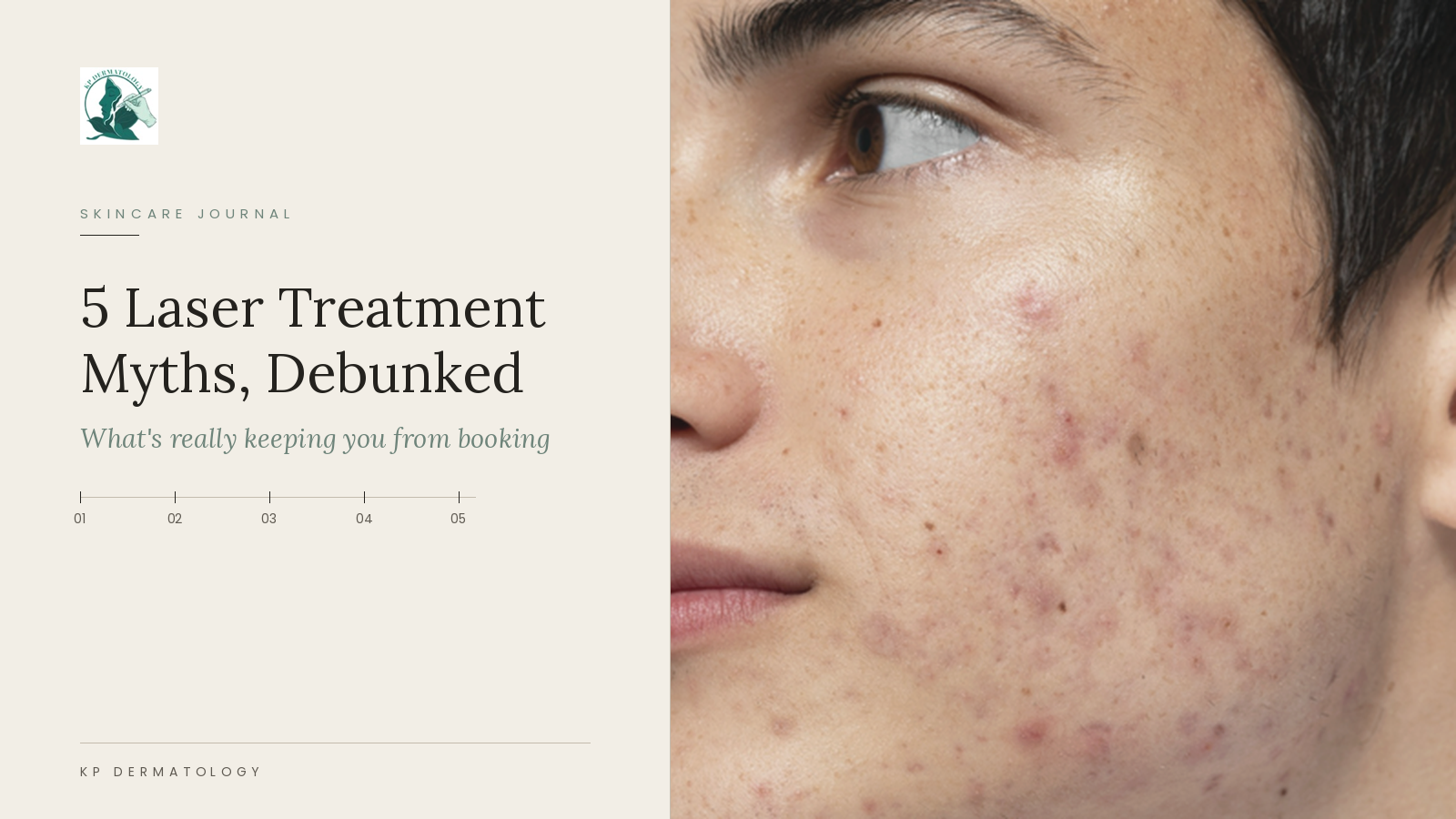
Acne clears. The marks it leaves behind often do not, and that is usually what brings people to a dermatologist.
Atrophic acne scarring responds genuinely well to modern laser treatment. The important caveat is that a laser treats the scar, not the acne, so the order in which things are done matters enormously. This guide explains how the laser works, what it can realistically achieve, and where it belongs in a proper treatment plan.
Who actually needs laser acne scar treatment?
Laser scar treatment is for people left with depressed scars, uneven texture, enlarged pores or lingering post-acne marks after their acne has settled. It is not a treatment for active breakouts. Active acne is controlled medically first, because treating inflamed skin risks aggravating both the acne and the pigmentation it leaves behind.
Scarring after acne is more common than most people expect. A meta-analysis pooling 37 studies and 24,649 acne patients found the prevalence of acne scarring to be around 47 per cent, with risk climbing sharply alongside severity — patients with severe acne were more than five times as likely to scar as those with mild acne.
Timing matters as much as severity. In a study of 100 patients with post-acne scarring, all 18 patients who never sought treatment for their acne went on to develop moderate or severe scarring, 12 of them severe. Ice pick scars appeared in 94 per cent of that group, rolling scars in 86 per cent and boxcar scars in 54 per cent.
The practical lesson is blunt: treating active acne promptly is the single most effective scar treatment available. Laser is what we use once that window has passed.
What is the Candela PicoWay Resolve?
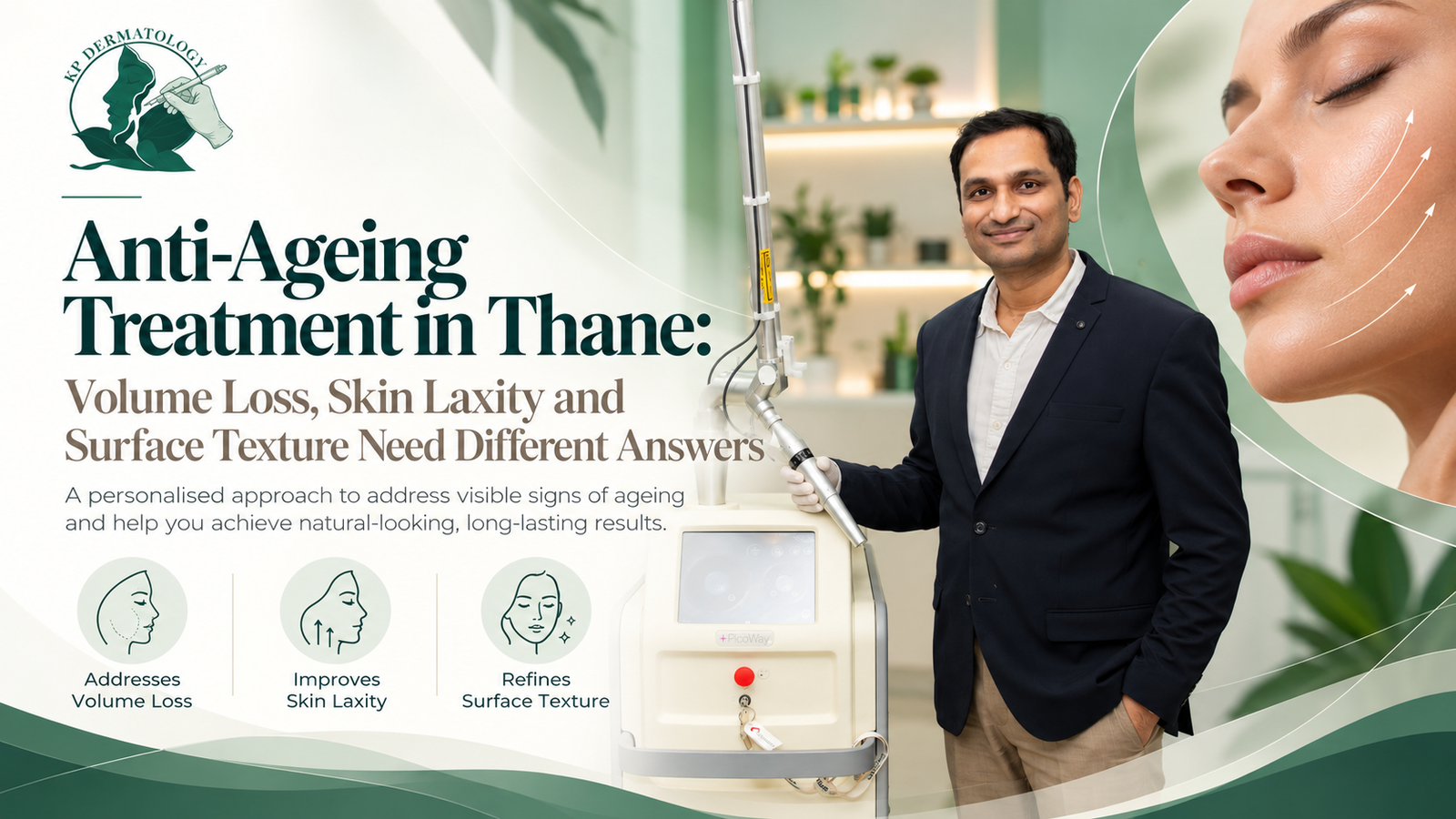
The PicoWay Resolve is a fractional picosecond handpiece designed for scar and texture correction. It differs fundamentally from older resurfacing lasers, and the difference is worth understanding because it explains both the shorter recovery and the improved safety profile in brown skin.
Traditional ablative lasers work by vaporising the skin surface and allowing it to heal back smoother. They are effective, but they involve significant downtime and, on Indian skin, a meaningful risk of post-inflammatory hyperpigmentation.
The science: laser-induced optical breakdown
The Resolve handpiece uses a diffractive lens array to split the beam into hundreds of tightly focused high-fluence points, separated by untreated skin — the “fractional” principle, which is what allows rapid healing from the surrounding intact tissue.
At those focal points the energy density is high enough to produce laser-induced optical breakdown (LIOB): a brief plasma forms and generates a rapid pressure wave, creating microscopic vacuoles within the epidermis and upper dermis. The skin surface is not ablated — it remains largely intact — but the body registers the vacuoles as injury and initiates a wound-healing cascade, remodelling the extracellular matrix and laying down new collagen and elastin. That new collagen is what fills a depressed scar from below.
Because the pulse lasts picoseconds — trillionths of a second — the effect is predominantly photoacoustic (photomechanical) rather than photothermal. The pulse ends before absorbed energy can conduct outwards as heat, so the surrounding tissue receives far less thermal load than it would from a nanosecond or ablative device.
That distinction is not a technicality in Indian skin. Thermal injury and the inflammation that follows are the principal drivers of post-inflammatory hyperpigmentation, which is the main risk of any resurfacing procedure in Fitzpatrick types IV and V. Reducing thermal load reduces that risk — it does not eliminate it, and no honest clinic will claim it does.
PicoWay in Thane
KP Dermatology is the only clinic in Thane equipped with the Candela PicoWay. Dr Prratyush More was the first dermatologist in Thane to introduce the technology, and every PicoWay procedure is performed by Dr More himself — not delegated to a technician or assistant. In scar work this matters particularly, because fluence, spot density, pass count and endpoint are judged region by region across a single face.
Which acne scars does it treat?
The Resolve treats atrophic (depressed) acne scars — ice pick, boxcar and rolling — and improves general texture, enlarged pores and post-acne marks. Raised hypertrophic and keloid scars are a different problem entirely and are managed with intralesional steroid, silicone, pressure or other modalities rather than fractional resurfacing.
| Scar Type | What It Looks Like | Realistic Approach |
|---|---|---|
| Rolling | Broad, shallow depressions with sloping edges, often tethered to underlying tissue | Responds well to collagen stimulation; tethered scars usually need subcision to release the fibrous bands before laser can lift them |
| Boxcar | Wider depressions with sharp vertical edges | Improves steadily across sessions; deep boxcar scars may need punch elevation or excision |
| Ice Pick | Narrow, deep, tapering tracts extending into the dermis | The most resistant type. Laser alone underperforms — TCA CROSS or punch excision is usually the more effective primary treatment, with laser used to blend the surrounding texture |
| Texture and Pores | General roughness, enlarged follicular openings | Usually the first change patients notice, often within the first two sessions |
| Post-Acne Marks | Flat brown (PIH) or flat red-purple (PIE) marks — not scars at all | Different targets: pigment responds to 1064 nm and topical therapy; erythema is vascular and responds to vascular-targeting wavelengths. Many fade on their own with time and photoprotection |
The distinction between a mark and a scar decides the treatment. Post-inflammatory hyperpigmentation and post-inflammatory erythema are flat discolouration that will often resolve without any procedure. A scar is a structural change in the dermis and will not.
Most people have more than one scar type on the same face, which is why in-person assessment matters and why combination treatment is the norm rather than the exception. A plan built for rolling scars will underdeliver on ice pick scars, and honest expectation-setting on the deepest scars is part of a proper consultation.
What does the treatment involve?
Each session takes 15 to 30 minutes after topical anaesthetic. Most patients need four to six sessions spaced three to four weeks apart, with mild redness for 24 to 48 hours afterwards. Results build progressively over the following months as collagen remodels — a process that continues for three to six months after the final session, so the true endpoint is assessed well after treatment finishes rather than immediately.
Consultation: scar types and depth assessed, active acne addressed first if present, session count and combination approach agreed.
Preparation: topical anaesthetic applied for roughly 30 to 45 minutes.
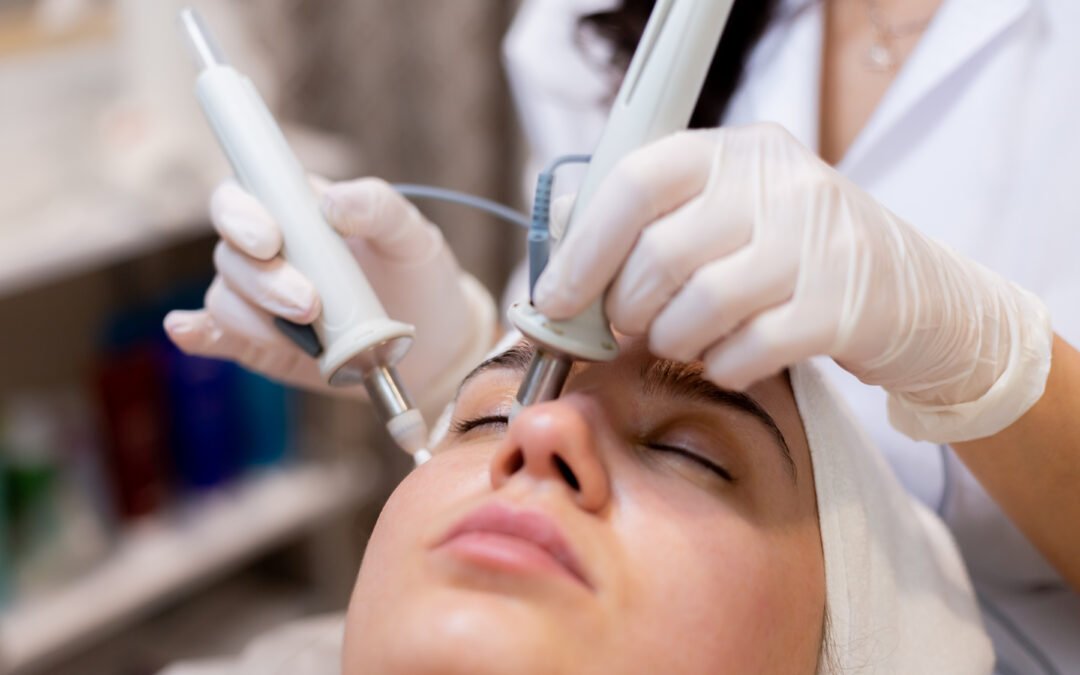
Treatment: the handpiece is passed over the area; most patients describe a light snapping sensation.
Recovery: mild redness and a sandpapery texture for a day or two; normal activity resumed almost immediately.
Interval: three to four weeks between sessions, to allow collagen remodelling to complete.
Assessment: gradual improvement across the course, with the full effect judged three to six months after the last session.
Aftercare
Daily broad-spectrum SPF 50+, ideally tinted, reapplied — this is the single most common reason results disappoint.
No retinoids, acids, benzoyl peroxide or vitamin C for roughly five to seven days, or as advised.
Bland cleansing and moisturising; no scrubs or exfoliating devices while the skin feels rough.
No stacked procedures — facials, waxing, threading or peels — within the recovery window.
Avoid deliberate heat (sauna, steam, hot yoga) and significant sun exposure for several days.
Who should not be treated, or should wait
Assessment before treatment should exclude or delay for: active or unstable acne; active skin infection at the site, including herpes simplex — antiviral prophylaxis is advisable where there is a history of recurrent cold sores; a history of keloid or hypertrophic scarring; recent significant sun exposure or tanning; photosensitising medication; unstable melasma; and pregnancy, where treatment is generally deferred.
A note on isotretinoin. The traditional rule was to wait six to twelve months after finishing isotretinoin before any resurfacing. More recent expert consensus has revised this: current evidence does not support a blanket delay for non-ablative fractional lasers, superficial peels or microneedling, and these may be considered in appropriately selected patients. It remains an individual clinical decision, so tell your dermatologist if you are taking or have recently taken isotretinoin rather than assuming either way.
Is laser scar treatment safe for Indian skin?
Yes, when the device, settings and interval are appropriate — but the calculation genuinely differs from lighter skin.
Higher epidermal melanin means competing absorption: more of the laser energy is taken up by melanin in the epidermis rather than reaching the intended target, which raises both the risk of epidermal injury and the risk of the skin responding with more pigment. This is why protocols developed for lighter skin cannot simply be transferred, and why conservative fluence, lower spot density, adequate cooling and longer intervals matter here.
Post-inflammatory hyperpigmentation can still occur even with correct technique. It is usually transient and treatable with photoprotection and topical therapy, but it is a real and disclosed risk rather than a theoretical one. Pre-treatment priming with a topical agent, and strict photoprotection throughout the course, reduce its likelihood.
Experience is the variable that matters most. The same device in different hands produces very different outcomes, and on brown skin the margin for error is narrower.
Frequently asked questions
Does laser treat active acne, or only scars?
Scars and texture, not active breakouts. Active acne is controlled medically first, because treating inflamed skin can aggravate both the acne and the pigmentation it leaves behind. Scar treatment begins once the acne is settled and stable.
How much improvement can I realistically expect?
Meaningful but partial. Across a completed course, improvement in the region of 25 to 50 per cent is a reasonable expectation for atrophic scarring, with better results where laser is combined with subcision, TCA CROSS or punch techniques for the scars that need them. Complete erasure is not an outcome any device delivers, and it should not be promised.
How many sessions will I need?
Most patients need four to six sessions, three to four weeks apart. Deeper ice pick scarring usually needs a combination approach rather than more laser. The number is set at consultation after assessing scar type and depth, not estimated in advance.
Is the treatment painful?
It is well tolerated. Topical anaesthetic is applied beforehand and most patients describe a light snapping sensation. Sessions last 15 to 30 minutes, with mild warmth afterwards that settles quickly.
How long is the downtime?
Typically 24 to 48 hours of mild redness, similar to light sun exposure, with a slightly rough texture for a day or two. Most patients resume normal activity the same or next day, and makeup can usually be worn after 24 hours.
Will the results last?
The collagen laid down beneath a scar is a structural change, so the improvement is durable rather than temporary. Two caveats: new acne can create new scars, so keeping acne controlled protects the result; and skin continues to age, so texture and pore appearance benefit from periodic maintenance.
Can I have this if I still get occasional pimples?
Usually yes, if the acne is well controlled and stable. Occasional lesions are not a barrier; active inflammatory disease is. That judgement is part of the consultation.
Why choose KP Dermatology for acne scar treatment in Thane
Because acne scarring needs the right sequence as much as the right device, If you are looking for acne scar treatment in thane which works best where the acne and the scarring are handled by the same dermatologist.
Dr Prratyush More brings over fourteen years of clinical experience and advanced international laser training, and was the first dermatologist in Thane to introduce Candela PicoWay — the clinic remains the only one in Thane with the technology. Patients are assessed for scar type, depth and active disease first, treated with settings calibrated for Indian skin, and offered combination approaches such as subcision, TCA CROSS or microneedling where scarring needs more than laser alone. Every PicoWay procedure is performed by Dr More himself, and all other procedures are carried out under his direct supervision.
Book a consultation
Acne scars respond genuinely well to modern laser treatment, but the results come from correct sequencing, appropriate settings and realistic expectations rather than from the machine alone. If acne has left you with scarring or uneven texture, book a consultation at KP Dermatology, Thane, for an honest assessment of what can be improved.
References
1. Meta-analysis of acne scar prevalence pooling 37 studies and 24,649 patients.
2. Clinical study of scar morphology and treatment-seeking behaviour in 100 patients with post-acne scarring.
3. Jacob CI, Dover JS, Kaminer MS. Acne scarring: a classification system and review of treatment options. Journal of the American Academy of Dermatology.
4. Torbeck RL, Schilling L, Khorasani H, et al. Evolution of the picosecond laser: a review of literature. Dermatologic Surgery.
5. Habbema L, Verhagen R, et al. Minimally invasive non-thermal laser technology using laser-induced optical breakdown for skin rejuvenation. Journal of Biophotonics.
6. Spring LK, Krakowski AC, Alam M, et al. Isotretinoin and timing of procedural interventions: a systematic review with consensus recommendations. JAMA Dermatology.
7. Alexis AF, et al. Laser and light-based treatments in skin of colour: safety considerations and risk of post-inflammatory hyperpigmentation.
8. Anderson RR, Parrish JA. Selective photothermolysis: precise microsurgery by selective absorption of pulsed radiation. Science.