Medically reviewed by Dr Prratyush More, MBBS, DDVL, dermatologist.
Summary: Pre-bridal skin prep works best when started 3 to 6 months before the wedding, structured across five phases: assessment, foundational treatment for acne or pigmentation, a radiance-building sequence of facials and peels, a final touch-up 3 to 7 days before the event, and ongoing maintenance. This gives skin enough time to complete its natural renewal cycle and lets any laser or peel-related redness fully settle before the big day. If the wedding is only weeks away, gentler options like HydraFacials and mild peels are safer than starting anything aggressive late.
Every bride wants to start “early enough,” but few are told what that actually means in weeks and months.
The honest answer depends on what your skin needs fixed. Pigmentation and acne scarring take real time to correct properly. A dull complexion needs far less.
Here’s how a sensible pre bridal skin care treatment in Thane timeline actually breaks down, phase by phase.
What’s the ideal timeline for pre-bridal skin prep?
The ideal timeline for pre-bridal skin prep is 3 to 6 months before the wedding date, which gives enough time for corrective treatments to work, any redness or peeling to settle, and a final radiance-building phase before the event itself. Shorter timelines are workable but limit what can safely be attempted.
This window isn’t an arbitrary marketing number. It reflects how long skin genuinely takes to show results and recover between sessions, which is exactly why rushing this process tends to disappoint rather than deliver.
Month by month: what actually happens at each stage?
A structured pre-bridal plan moves through five phases: an initial skin assessment, foundational treatment for any acne or pigmentation, a radiance-building sequence, a final touch-up just before the wedding, and maintenance guidance to carry results through to the big day itself.
- Assessment (start of the 3 to 6 month window): skin is properly evaluated, current concerns identified, and a realistic plan built around your actual skin, not a generic package.
- Foundational treatment (months 1 to 2 or 3): active issues are addressed first, typically acne control or pigmentation and tan correction using laser or medical-grade peels, since nothing else works well while these are still unresolved.
- Radiance-building sequence (months 2 to 3, running into the final month): a course of HydraFacials, MediFacials, and brightening peels like the Blue Radiance Peel builds glow and evens tone once the foundational issues are under control.
- Final touch-up (3 to 7 days before the wedding): a gentle, low-risk session designed purely to add glow immediately before the event, with nothing aggressive or new attempted this close to the date.
- Maintenance: simple guidance to protect results through the lead-up, mainly sun protection and a settled skincare routine rather than further procedures.
Skipping straight to phase three without addressing an underlying pigmentation or acne problem in phase two is the most common reason brides feel their results are underwhelming.
What if the wedding is only a few weeks away?
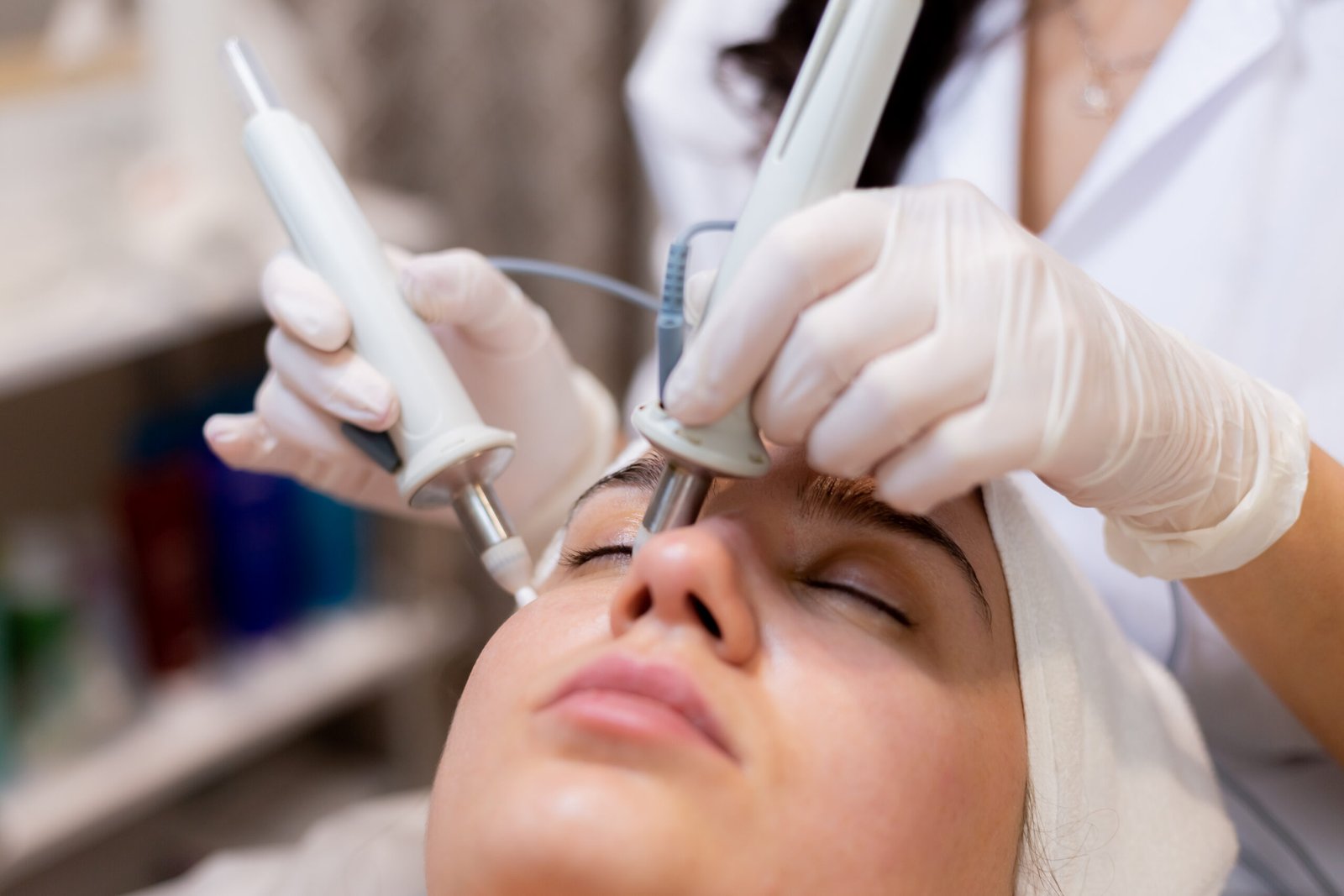
If the wedding is only a few weeks away, the safest approach is sticking to gentler, lower-risk treatments like HydraFacials and mild peels rather than attempting anything that carries downtime or a reaction risk this close to the event.
This isn’t overcaution for its own sake.
Laser treatments and stronger peels can cause temporary redness, peeling, or occasional pigment changes while the skin heals, none of which is what anyone wants to be managing during wedding week. A HydraFacial or mild peel session, by contrast, gives an immediate, low-risk glow with essentially no recovery time.
If your timeline is short, an honest consultation about what’s actually achievable safely matters more than squeezing in a treatment that might backfire.
Why does starting early actually matter, biologically?
Starting early matters because skin has a genuine biological renewal cycle, and rushing a treatment plan works against that cycle rather than with it. The visible result of any corrective treatment only appears once the skin has had time to complete its natural turnover and settle.
The numbers back this up. Research on epidermal biology estimates that the human epidermis fully renews itself roughly every 40 to 56 days. A single session often needs more than a month before its full effect is even visible, let alone before a second one can safely build on it.
Trying something new close to the date carries its own risk too. Dermatologists generally recommend patch-testing any new product on a small area for seven to ten days before full use, specifically to catch a reaction before it happens somewhere visible. That alone rules out trying anything untested in the final fortnight before a wedding.
What mistakes do brides commonly make with pre-wedding skin prep?
The most common mistakes are starting too late for the concern being treated, trying a new product or treatment for the first time close to the wedding, and jumping straight to glow-focused facials without addressing an underlying issue like active acne or pigmentation first.
A few worth flagging specifically:
- Leaving pigmentation or acne scarring until the last month: these genuinely need the full 3 to 6 month window, not a rushed fix.
- Testing a new product for the first time during wedding week: exactly when an unexpected reaction is least welcome.
- Booking an aggressive treatment within days of the event: redness or peeling has no time to settle.
- Skipping the assessment step: a generic package rarely suits a specific skin concern as well as a plan built around it.
None of these are difficult to avoid once you know the timeline they’re working against.
Frequently asked questions
How many months before the wedding should skin prep start?
Ideally 3 to 6 months, which allows time for corrective treatments like pigmentation or acne scar correction to work fully before moving into the radiance-building and final touch-up phases.
What treatment should happen right before the wedding?
A gentle final touch-up 3 to 7 days before, typically a HydraFacial or mild peel, is the safest choice. Nothing aggressive or untested should be attempted this close to the event.
Can pre-bridal skin prep start with only a few weeks left?
Yes, but options are more limited. Gentler treatments like HydraFacials and mild peels are appropriate, while laser treatments and stronger peels are best avoided this close to the date due to redness and recovery time.
Does pre-bridal skin prep only cover the face?
It’s usually focused on facial skin, particularly pigmentation, tan, acne scarring, and radiance, though the same principles around timing and gentler final sessions apply to any exposed skin being prepared for the event.
Why can’t a facial alone fix pigmentation before the wedding?
Facials build glow and hydration but don’t correct underlying pigmentation or acne scarring, which need targeted treatment like laser or medical-grade peels first. Skipping that step is why results from facials alone often feel disappointing.
Why choose KP Dermatology for Pre Bridal Skin Care Treatment in Thane
Because a rushed, generic package rarely delivers what a bride actually wants to see on the day, a properly sequenced plan matters more than any single treatment.
KP Dermatology structures pre-bridal and groom skin care around a proper assessment first, followed by foundational correction using PicoWay laser or microneedling where needed, a radiance-building sequence of HydraFacials and brightening peels, and a gentle final session close to the date. Dr Prratyush More brings over fourteen years of clinical experience to every plan, calibrated for Indian skin throughout.
That phased, assessment-first approach is what makes the clinic a trusted choice for pre bridal skin care treatment in Thane.
The best pre-bridal result comes from timing the plan to how skin actually heals and renews, not from cramming treatments into the final weeks. If your wedding date is set, booking a consultation now is the single most useful thing you can do for your skin before it.