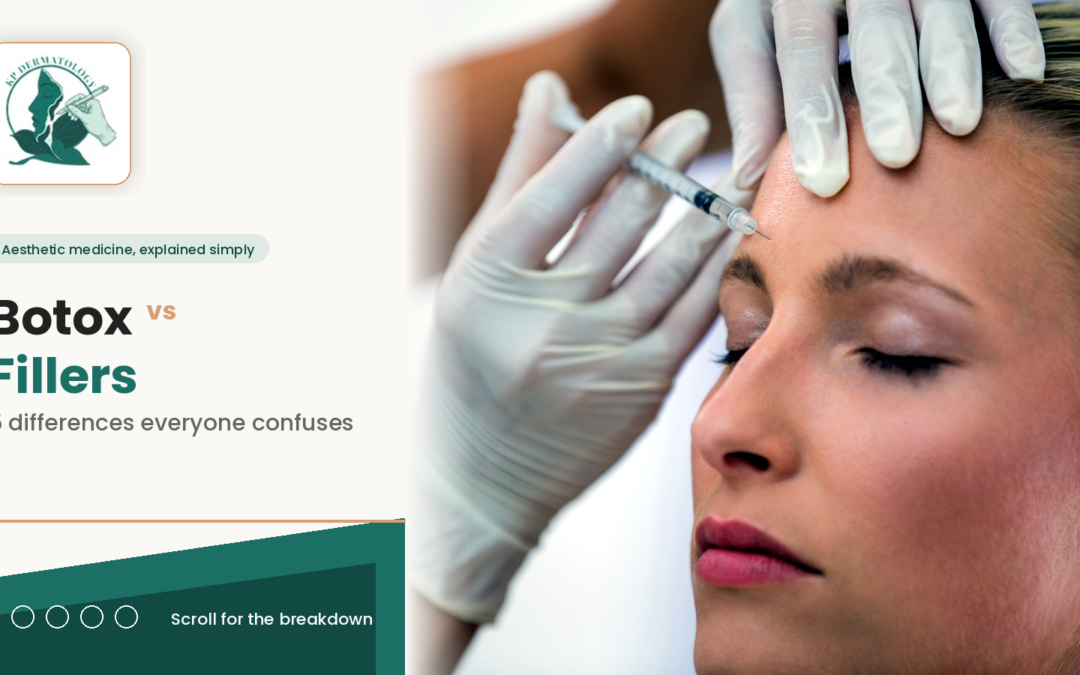
Summary: Botox relaxes muscles to soften dynamic wrinkles like frown lines and crow’s feet, lasting 3 to 4 months, while dermal fillers add volume to treat static wrinkles and hollowed areas, lasting closer to 9 to 12 months. They work through entirely different mechanisms, treat different problems, and are often used together rather than as alternatives to each other. The clinic doesn’t perform either, focusing instead on anti-aging treatment in Thane built around laser-driven collagen boosting treatment in Thane rather than relaxing muscles or adding volume, a genuine non-injectable option worth knowing about if needles aren’t for you.
Botox and fillers get lumped together constantly, as if they’re two brands of the same thing. They’re not.
One relaxes muscles. The other adds volume. Confusing them leads people to ask for the wrong treatment entirely, then wonder why the result wasn’t what they expected.
Here’s what actually separates the two, and a non-injectable option worth knowing about if neither appeals to you.
What’s the core difference between Botox and fillers?
Botox works by temporarily relaxing the muscles that cause expression lines, while dermal fillers work by physically adding volume beneath the skin. One softens movement-related wrinkles from the inside; the other restores lost fullness or fills a specific hollow or fold.
| Botox | Dermal fillers | |
| Mechanism | Relaxes muscle movement | Adds volume beneath the skin |
| Best for | Dynamic wrinkles (forehead, crow’s feet, frown lines) | Static wrinkles, volume loss, folds |
| Typical duration | 3 to 4 months | 9 to 12 months on average |
| Onset | 3 to 5 days, full effect near 2 weeks | Immediate |
| Common areas | Upper face, areas driven by expression | Cheeks, lips, nasolabial folds |
That mechanism difference is really the whole story. Everything else, which wrinkles each one treats, how long it lasts, how it’s used, flows directly from whether it’s relaxing a muscle or adding volume.
Why does the duration differ so much between the two?
Botox lasts a shorter 3 to 4 months because the nerve signal it blocks gradually returns as the effect wears off, while dermal fillers last longer because the volume they add takes months to break down naturally in the body. The two simply degrade through completely different biological processes.
According to medical sources citing the American Society of Plastic Surgeons, dermal fillers last from 9 to 12 months on average, though this varies by product and by how much the treated area moves. Areas with more movement, like the lips, tend to break down faster than relatively still areas like the cheeks.
Botox’s shorter window isn’t a downside so much as a different kind of commitment. Regular top-ups every few months are simply part of how it works.
Can you get both, and does the order matter?
Yes, Botox and fillers are commonly used together rather than as competing choices, because they address different problems that often exist on the same face at the same time. When both are used, Botox is generally done first, allowing the practitioner to see how the muscles settle before deciding exactly where volume is needed.
This is where a lot of the confusion actually comes from. People assume they need to pick one, when the honest answer for many faces is that dynamic lines respond to one and volume loss responds to the other, and neither substitutes for what the other does.
Is there a non-injectable anti aging treatment in Thane that still addresses ageing skin?
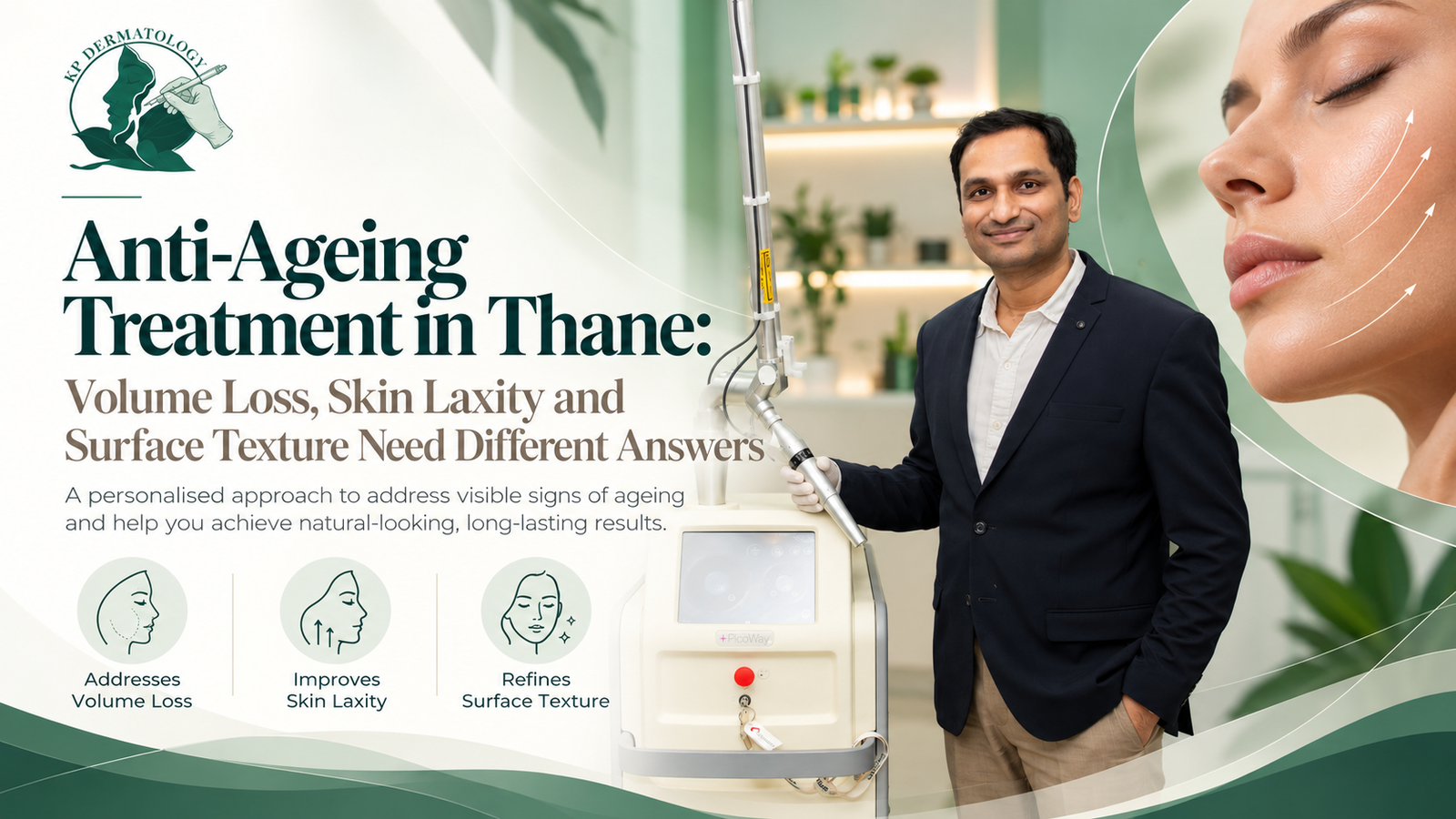
Yes. Laser treatments that stimulate the skin’s own collagen and elastin production offer a genuine non-injectable alternative for early signs of ageing, working gradually from within the skin rather than relaxing muscles or adding external volume.
This is the option the clinic actually offers as its collagen boosting treatment in Thane, and the difference in approach is worth understanding rather than assuming it’s a lesser substitute.
A recent clinical study on picosecond laser skin rejuvenation, conducted specifically on Asian skin, found statistically significant improvement in wrinkles after a series of three sessions spaced four weeks apart, with histological analysis confirming increased collagen and elastic fibres in the treated skin. Over 79 per cent of participants reported moderate to remarkable improvement.
The mechanism is genuinely different from both Botox and fillers. Rather than relaxing a muscle or filling a space, the laser’s photoacoustic energy prompts the skin to rebuild its own collagen and elastin over the following weeks, which is why results build gradually rather than appearing immediately.
Which approach is actually right for you?
The right approach depends on what’s actually causing the concern you want addressed: expression-driven lines suit Botox, volume loss or deep folds suit fillers, and early, broader signs of ageing skin without a specific line or hollow to target often suit a collagen-building laser approach instead.
A few honest pointers:
- Deep, expression-linked lines that appear only when you frown or smile: typically a Botox concern.
- Hollowed cheeks, thinning lips, or a deep static fold: typically a filler concern.
- Overall dullness, fine lines, and early loss of skin quality: often better suited to a collagen boosting treatment in Thane delivered by laser rather than a needle.
- Wanting an anti aging treatment in Thane without needles: worth discussing a laser-based option specifically.
A proper consultation, rather than picking a treatment off a menu, is what actually gets this right.
Frequently asked questions
Is Botox or filler better for under-eye hollows?
Filler is generally the appropriate choice for under-eye hollows, since this is a volume loss concern rather than a muscle-movement one. Botox has no effect on hollowing because it doesn’t add volume.
Can Botox and fillers be done on the same day?
Yes, many practitioners perform both in the same appointment, typically starting with Botox so the muscle response can be assessed before deciding where filler is needed. This isn’t universal practice, so it’s worth confirming with your provider.
Does this clinic offer Botox or fillers?
No. The clinic focuses on laser-based treatments that build the skin’s own collagen and elastin rather than relaxing muscles or adding volume, offering a different, non-injectable approach to early signs of ageing.
How is a collagen-building laser different from Botox or fillers?
It works gradually by stimulating your skin’s own collagen production over several weeks, rather than relaxing a muscle or adding external volume immediately. Results build over a course of sessions instead of appearing right away.
Which lasts longer, Botox or fillers?
Fillers generally last longer, averaging 9 to 12 months compared with Botox’s 3 to 4 months, though both vary by individual, product, and treatment area.
Why choose KP Dermatology for collagen-boosting anti-ageing treatment in Thane
Because not every ageing concern needs a needle, having an honest, non-injectable option matters for patients who’d rather avoid one entirely.
KP Dermatology’s anti-ageing and wrinkle reduction laser treatment works by rebuilding the skin’s own structure and quality rather than relaxing muscles or adding volume. Dr Prratyush More brings over fourteen years of clinical experience and was the first dermatologist in Thane to introduce Candela PicoWay laser technology, with every session calibrated for Indian skin under his direct supervision.
That honest, non-injectable approach is what makes the clinic a trusted choice for collagen boosting treatment in Thane, for patients who’d rather build their skin’s own quality than relax or fill it.
Botox and fillers aren’t competitors, and neither is the only route to healthier-looking skin. If needles aren’t for you, or you’re simply curious what a laser-based, collagen-building approach can do, book a consultation for an honest assessment of what suits your skin.