By KP Dermatology | Medically reviewed by Dr Prratyush More, MBBS, DDVL, dermatologist
Facial ageing is not one problem, so no single treatment fixes it. There are three: volume loss, which hollows the face; skin laxity, which makes it sag; and surface texture, which shows as lines, roughness and uneven tone. Effective anti-ageing treatment in Thane starts by working out which of the three is driving the change you see, then matching fillers or stimulators to volume, energy-based tightening to laxity and resurfacing to texture.
Key insights
- Most people see all three problems, in different proportions: the plan should follow the proportion, not a package.
- Volume loss happens under the skin: fat pads shrink and shift, and bone slowly resorbs.
- Laxity is a collagen and support problem: tightening treatments work on that layer, not on hollows.
- Texture is the surface layer: resurfacing, peels and microneedling improve it, but cannot lift a sagging cheek.
Before you go
Look at a photograph of yourself from ten years ago next to a recent one, in similar lighting. Ask three separate questions: is the face flatter or more hollow, is it lower or looser, and is the skin surface rougher or more lined? Your answers are a surprisingly accurate first map of what to treat.
People often arrive at an aesthetic clinic describing ageing as a single feeling: “I look tired”, “my face looks older” or “I want to look fresher”. Those are real concerns, but they describe the result, not the cause. And the cause decides the treatment.
This is why so many people are disappointed after their first anti-ageing treatment. A laser that improves texture will not restore lost cheek volume. A filler that restores volume will not tighten loose skin along the jaw. This guide explains the three problems, how to tell which ones you have, which treatments fit each one, and how a combined plan works.
Why is facial ageing three problems, not one?
Because ageing happens in several layers at once, and each layer changes in its own way. Bone, fat, muscle, supporting ligaments and skin all age, at different speeds and for different reasons.
Deep layers: bone and fat
The deepest changes are in the facial skeleton and the fat pads above it. These create volume loss, the hollowing and flattening that makes a face look tired or gaunt.
Middle layer: support and collagen
The skin’s collagen and the tissues that hold it in place weaken with age. This creates laxity, the loosening and descent that shows as jowls, a softer jawline and folds.
Surface layer: the skin itself
The outer skin changes too, with thinner layers, slower cell turnover and accumulated sun damage. This creates texture problems: fine lines, rough skin, enlarged pores and uneven tone.
| Problem | Layer | What you see | What treats it |
| Volume loss | Bone and fat | Hollow cheeks and temples, flatter mid-face | Fillers, biostimulators |
| Laxity | Collagen and support | Jowls, softer jawline, deeper folds | Energy-based tightening, threads |
| Texture | Surface skin | Fine lines, roughness, pores, uneven tone | Resurfacing, peels, microneedling |
What is volume loss, and how is it treated?
Volume loss is the reduction and redistribution of fat and bone that makes the face look flatter and more hollow. It often starts in the mid-face and temples, and around the eyes.
What causes it
Facial fat is not one continuous layer. Anatomical research has shown that facial fat is divided into distinct compartments, which change in volume and position independently with age. Some compartments shrink, some descend, and the transitions between them become visible. At the same time, parts of the facial skeleton resorb with age, including the orbital rims and mid-face, removing some of the support the soft tissues rest on.
How it is treated
Volume loss is treated by replacing or stimulating volume. Hyaluronic acid fillers restore volume directly and immediately. Biostimulators encourage the body to build collagen gradually. Both need careful placement to support the face in the right places rather than simply adding bulk.
What will not work
Lasers and resurfacing treatments do not restore lost volume. They improve the skin on top, but they cannot rebuild a hollow cheek. Using them for volume loss is one of the most common reasons for disappointment.
What is skin laxity, and how is it treated?
Laxity is the loosening of skin and supporting tissues that lets the face descend. It shows as jowls, a less defined jawline, deeper nasolabial folds and loose skin on the neck.
What causes it
Collagen and elastin production slows with age, and existing collagen weakens. The ligaments and connective tissue that anchor skin to deeper structures also loosen. Sun damage speeds both processes up.
How it is treated
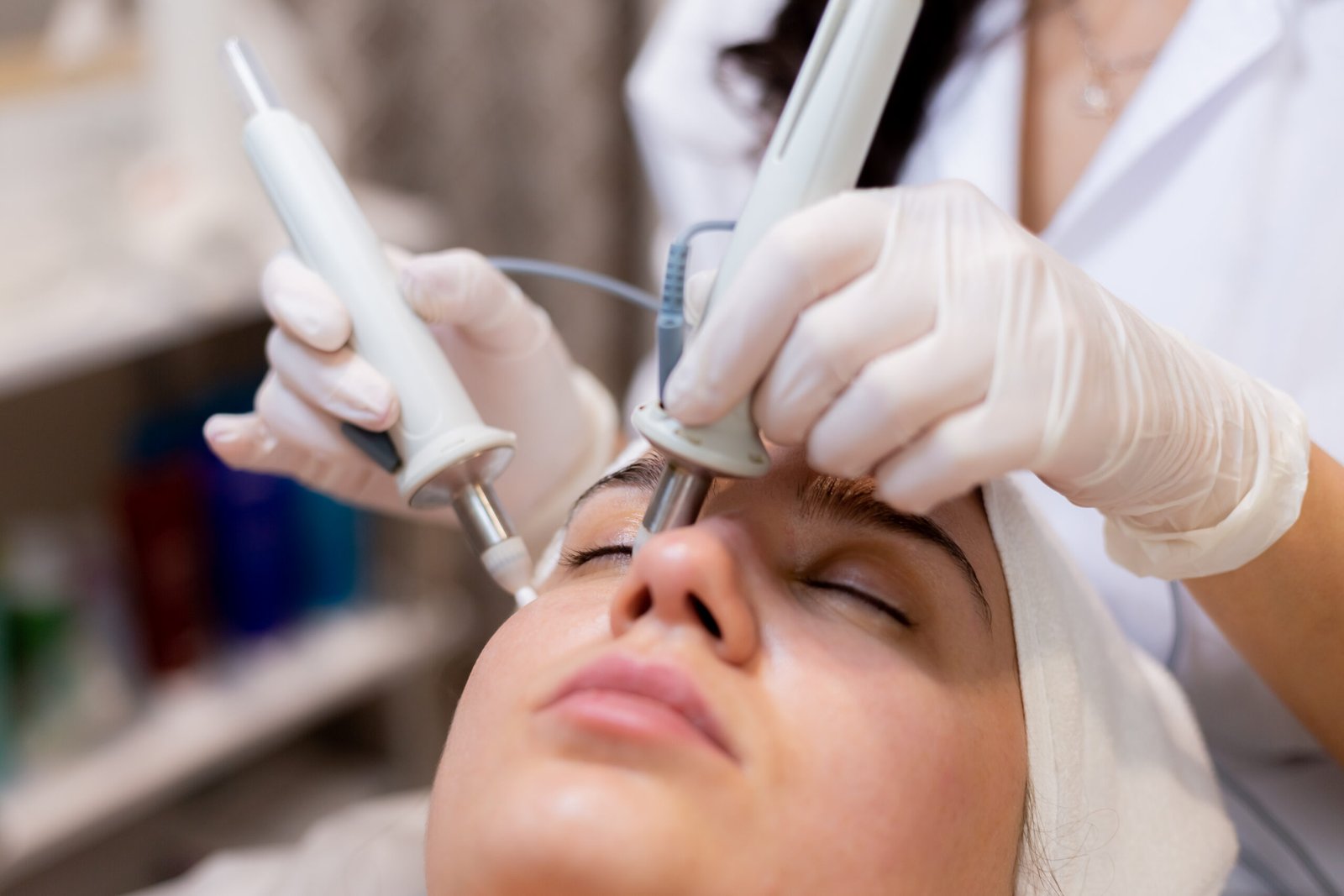
Laxity is treated with energy-based tightening, which heats the deeper skin layers to contract existing collagen and stimulate new collagen. At KP Dermatology this includes laser skin tightening and the Fotona 4D non-surgical facelift, which works on several layers of the face, including from inside the mouth, in a single session. Thread lifts are another option for mild to moderate laxity.
What will not work
Fillers can disguise mild laxity by supporting the tissues, but using large volumes of filler to lift a sagging face often looks heavy and unnatural. Tightening needs its own treatment.
What is surface texture, and how is it treated?
Texture is the condition of the skin surface: fine lines, crepey skin, roughness, enlarged pores, sun spots and uneven tone. It is the layer most people notice first in a mirror.
What causes it
Texture changes come from slower cell turnover, thinning skin, reduced moisture and, above all, cumulative sun exposure. In Indian skin, uneven pigmentation is often as much a part of “ageing skin” as lines.
How it is treated
Texture responds to resurfacing treatments that remove or remodel the surface layers. Options include laser resurfacing, chemical peels, microneedling and picosecond laser treatments. On Indian skin, the settings and intervals are chosen carefully to avoid post-inflammatory pigmentation.
Dynamic lines are a separate question
Lines that appear only when you move your face, such as frown lines and crow’s feet, are caused by muscle activity. They respond to neuromodulator injections rather than to resurfacing, and they are usually treated alongside the three main problems rather than as part of them. The wrinkle reduction options cover both types.
| Treatment | Main target | How results appear | Typical downtime |
| Hyaluronic acid fillers | Volume loss | Immediately | Minimal, some swelling |
| Biostimulators | Volume and skin quality | Gradually over months | Minimal |
| Fotona 4D and laser tightening | Laxity | Gradually over weeks to months | Minimal |
| Thread lift | Mild to moderate laxity | Immediately, improving over months | A few days |
| Laser resurfacing and peels | Texture and tone | Over weeks | Depends on intensity |
| Microneedling | Texture and fine lines | Over weeks | One to three days |
| Neuromodulator injections | Dynamic lines | Within one to two weeks | Minimal |
How do you know which problem you have?
Most people have some of all three, but one usually dominates. A proper assessment identifies which, and in what order to treat them.
Signs of volume loss
Hollow temples, flattening of the cheeks, a hollow or dark look under the eyes, and a face that looks tired even after rest.
Signs of laxity
Jowls, a softer jawline, deepening folds from the nose to the mouth, and loose skin on the neck. Gently lifting the skin at the cheekbone with your fingertips and seeing the lower face improve is a rough sign that laxity is involved.
Signs of texture change
Fine lines at rest, rough or crepey skin, enlarged pores, sun spots and uneven tone. These are most visible in close-up or in harsh light.
| What you notice | Most likely problem | Where a plan usually starts |
| Hollow temples, flat cheeks, tired look | Volume loss | Fillers or biostimulators |
| Jowls, softer jawline, deeper folds | Laxity | Fotona 4D or laser tightening |
| Rough skin, fine lines, uneven tone | Texture | Resurfacing, peels, microneedling |
| Lines only when you move your face | Dynamic lines | Neuromodulator injections |
Why a professional assessment matters
Self-assessment is useful as a starting point, but proportions are hard to judge in a mirror. A dermatologist looks at the face in different positions and lighting, considers your skin type and history, and explains what each treatment can and cannot do for you.
What does anti-ageing treatment look like in your thirties, forties and fifties?
The balance of the three problems shifts with age, so the emphasis of treatment shifts too. These are broad patterns rather than rules, and individual faces vary widely.
In your thirties
Texture and early pigmentation usually lead. Fine lines start to appear at rest, and sun damage begins to show. Most plans focus on sun protection, skincare, light resurfacing and, for some, early treatment of dynamic lines.
In your forties
Volume loss and early laxity become more visible, particularly in the mid-face and along the jaw. Plans often add fillers or biostimulators and begin energy-based tightening, while continuing texture work.
In your fifties and beyond
Laxity and volume loss usually dominate, with thinner skin on top. Plans tend to combine all three approaches, with more emphasis on structure and tightening, and realistic goals about what non-surgical treatment can achieve compared with surgery.
How does a combined anti-ageing plan work?
A combined plan treats each problem with the right tool, in a sensible order, usually over several months.
A common sequence
- Assess and prioritise: identify which problem dominates and set realistic goals.
- Restore structure first: address significant volume loss, because tightening and resurfacing look better on a well-supported face.
- Tighten: treat laxity with energy-based treatments over a course of sessions.
- Refine the surface: improve texture and tone with resurfacing, peels or microneedling.
- Maintain: plan periodic maintenance, since ageing continues.
Why sequencing matters
Treating the surface first on a face with major volume loss often gives a smoother but still tired-looking result. Restoring support first lets each later treatment do more.
Maintenance
No anti-ageing treatment stops time. Fillers are gradually absorbed, collagen continues to decline and the skin keeps ageing. Most plans include maintenance sessions, and daily sun protection protects every result.
Wrapping up
Facial ageing is three separate problems: volume loss in the deep layers, laxity in the supporting tissues and texture change on the surface. Each needs its own treatment: fillers and biostimulators for volume, energy-based tightening such as Fotona 4D for laxity, and resurfacing, peels or microneedling for texture. Identifying which problems you have, and in what proportion, is what separates a satisfying result from an expensive disappointment.
KP Dermatology in Vasant Vihar, Thane West, builds anti-ageing plans around a layer-by-layer assessment by Dr Prratyush More, combining injectables, Fotona 4D and TimeWalker II protocols and resurfacing to suit each face. Book a consultation to find out which of the three problems is driving the changes you see.
FAQs
What is the best anti-ageing treatment?
There is no single best treatment. Volume loss responds to fillers or biostimulators, laxity to energy-based tightening such as Fotona 4D, and texture to resurfacing, peels or microneedling. Most people need a combination matched to their face.
At what age should anti-ageing treatment start?
There is no fixed age. Many people begin with sun protection and skincare in their twenties, texture treatments in their thirties, and volume or tightening treatments as those changes appear, usually from the late thirties onwards.
Does Fotona 4D restore lost volume?
No, not significantly. Fotona 4D mainly tightens skin and improves texture by stimulating collagen. It can make the face look firmer, but significant hollowing usually needs fillers or biostimulators alongside it.
How long do anti-ageing results last?
It depends on the treatment. Fillers typically last several months to over a year, tightening results build over months and fade gradually, and resurfacing results last longer with good sun protection. Most plans include maintenance.
Can lasers remove deep wrinkles?
Lasers improve fine lines and texture well, but deep folds usually involve volume loss or laxity. Those need fillers or tightening treatments as well. Dynamic lines from muscle movement respond better to neuromodulator injections.
Are anti-ageing treatments safe for Indian skin?
Yes, when planned by a dermatologist. Indian skin is more prone to pigmentation after heat or injury, so laser settings, peel strengths and treatment intervals are adjusted, and strict sun protection is advised throughout.