Summary: Laser treatment fixes concerns rooted in pigment, damaged collagen, sun spots, dark lip pigmentation, acne scars, tattoos, under-eye pigmentation, and dull, congested skin. It cannot fix active acne, deep static wrinkles caused by lost volume, keloid scarring, or conditions like vitiligo that need repigmentation rather than pigment removal. Getting the diagnosis right, before choosing a laser, is what decides whether the outcome actually satisfies you.
Laser gets asked to do a lot these days. Patients walk in wanting it to fix pigmentation, scarring, dullness, and fine lines, sometimes all in the same appointment.
Most of the time it can genuinely help. Occasionally, though, the concern in front of us simply isn’t a laser problem, and the honest answer is a different treatment plan, which is a conversation we have often at KP Dermatology.
Here’s a straight breakdown of what laser treatment realistically fixes, what it doesn’t, and where a very common but under-discussed concern, dark lip pigmentation, actually fits.
What skin concerns can laser treatment actually fix?
Laser treatment works well on problems caused by excess pigment, damaged collagen, unwanted tattoo, or dull, congested skin, because these all respond to the way laser energy interacts with melanin, tissue, and particles under the skin. It struggles with problems caused by lost volume, active inflammation, or scar tissue that has already matured into a raised or bound-down structure.
| Concern | What laser actually does | Realistic expectation |
| Sun spots and pigmentation | Breaks up excess melanin so the body clears it | Noticeable fading over 2 to 4 sessions |
| Dark lip pigmentation | Targets melanin in the lip skin with minimal heat | Gradual, even lightening over several sessions |
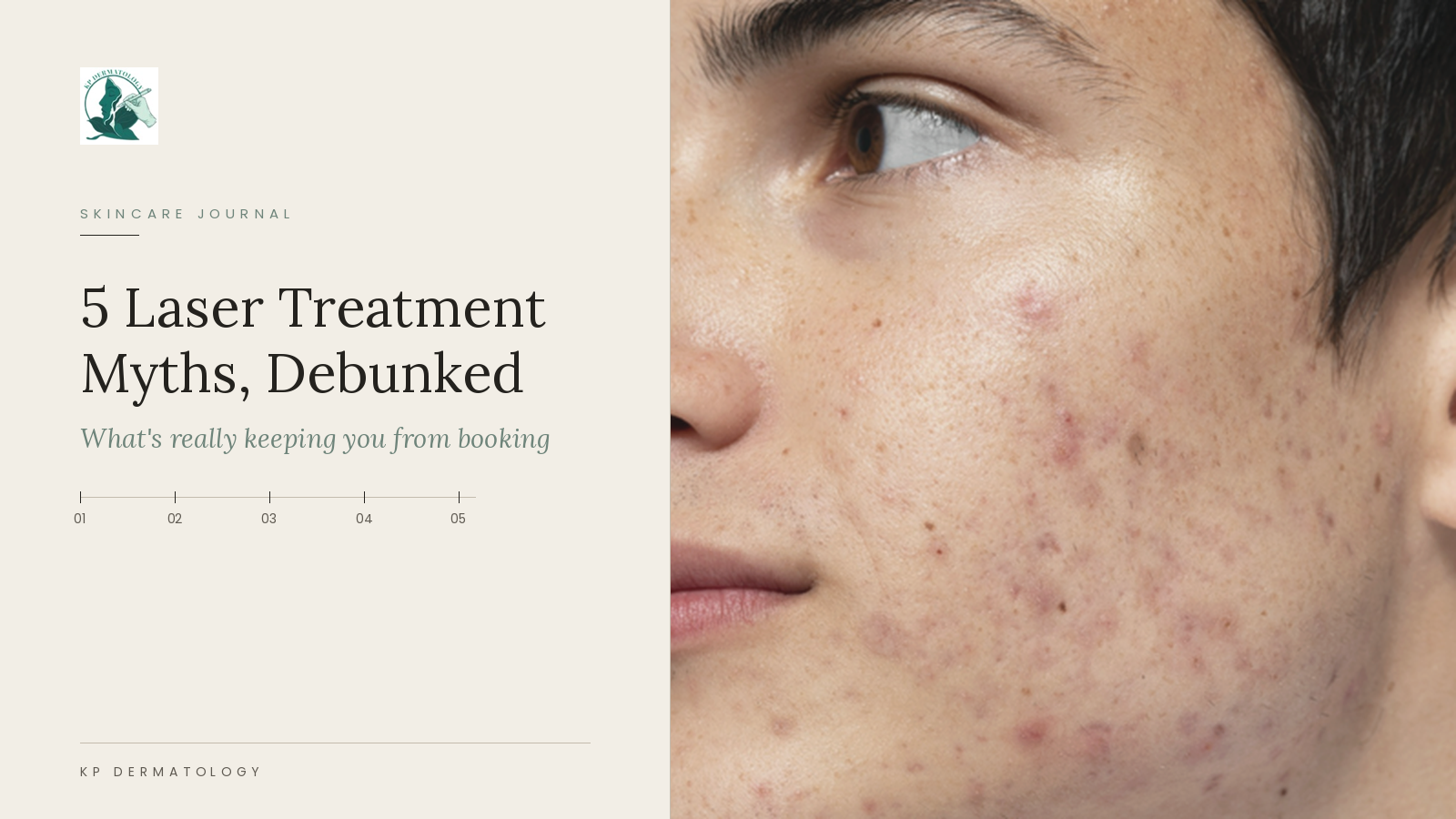
| Acne scars and texture | Stimulates collagen beneath depressed scars | Smoother texture over 4 to 6 sessions |
| Tattoos | Shatters ink particles for the body to clear | 4 to 10+ sessions depending on ink and colour |
| Under-eye pigmentation | Reduces melanin without excess heat near thin skin | Softer, more even under-eye tone |
| Dull, congested skin | Resurfaces and deep-cleanses in one session | Immediate glow, best before an event |
| Fine lines and early ageing | Builds new collagen for firmer skin | Gradual improvement, not a facelift |
Each responds because the target, whether it’s pigment, old collagen, or ink, is something a calibrated laser can reach and break down.
What can’t laser treatment fix?
Laser treatment cannot fix problems that aren’t caused by excess pigment or damaged collagen in the first place. Active acne needs medical treatment, not a laser, because inflamed skin lasered too early often scars worse. Deep static wrinkles from lost fat and bone volume need fillers or structural support, not resurfacing. Raised keloid scars need a completely different approach, and conditions like vitiligo need repigmentation, which is the opposite of what most lasers are built to do.
A few concerns worth calling out specifically:
- Active breakouts: treated medically first; laser is for the scarring left behind, not the inflammation itself.
- Deep, static wrinkles: these come from volume loss, and no resurfacing laser rebuilds lost fat or bone.
- Raised or keloid scarring: laser softens colour and texture at the edges, but it doesn’t flatten a truly raised scar.
- Melasma treated aggressively: heat from an over-enthusiastic session is a known trigger for melasma flares, so it needs a conservative, low-heat protocol.
- Vitiligo: a loss of pigment-producing cells, which needs repigmentation, not pigment removal.
Knowing this list matters as much as knowing what laser can do. It’s the difference between a satisfied patient and one disappointed by a treatment that was never going to solve their actual problem.
Laser treatment for dark lip correction: how does it actually work?
Laser treatment for dark lip correction uses a picosecond or Q-switched device tuned to target melanin in the lip skin while minimising heat, since lips are thin, sensitive, and prone to pigment rebound if overheated. Results build gradually across several sessions rather than in one sitting.
Dark or uneven lip pigmentation is more common than people realise, and it isn’t always about smoking. Genetics, sun exposure, certain medications, and repeated minor friction can all contribute, which is why an accurate cause matters before any laser is booked.
The clinical evidence is encouraging. A study using a picosecond 785 nm laser tuned to minimise blood absorption and maximise melanin absorption for lip hyperpigmentation reported an excellent response, above 75 per cent improvement, in 30 per cent of patients, with a further 37 to 43 per cent achieving a good response, and no adverse events recorded.
That gradual, layered response is the pattern to expect. Lip skin is delicate and vascular, so the safest approach is several conservative sessions rather than one aggressive pass.
Is laser treatment safe for Indian and darker skin tones?
Yes, when the device and settings are matched to the skin, but the risk of post-inflammatory hyperpigmentation is real and skin-tone dependent, which is why generic settings borrowed from lighter-skin protocols can backfire. The heat generated during treatment is the real variable that decides the outcome.
The scale of that risk with the wrong device is well documented. Research on ablative CO2 laser resurfacing found that up to 92 per cent of patients with Fitzpatrick skin type IV and higher developed post-inflammatory hyperpigmentation following treatment, a rate that drops sharply with gentler, low-heat, non-ablative technology.
This is exactly why picosecond devices tend to suit Indian skin better than older nanosecond or ablative lasers. The photoacoustic effect breaks up pigment mechanically rather than by heating tissue, which keeps inflammation, and the pigment rebound that follows it, considerably lower.
How do you know which laser treatment is right for your concern?
The right laser treatment depends on an accurate diagnosis of what’s actually causing the concern, not just what it looks like on the surface. A consultation should identify the cause, rule out anything laser can’t fix, and match the device and settings to your specific skin tone before a single session is booked.
A sensible process looks like this:
- Assessment: the concern is examined and its actual cause identified, not assumed from appearance alone.
- Skin typing: Fitzpatrick classification guides which device and energy settings are safe.
- Realistic mapping: you’re told honestly whether laser is the right tool, or whether something else should come first.
- A session plan: most concerns need multiple sessions spaced weeks apart, never a single fix.
- Sun protection: non-negotiable between sessions, since freshly treated skin pigments easily.
Booking a consultation before committing to a package is worth it, because the honest answer sometimes changes the entire plan.
Frequently asked questions
Can laser treatment fix dark lips permanently?
It produces a lasting improvement rather than a one-time permanent fix, since new pigment can form again from sun exposure or the original trigger. Most patients need several sessions and some maintenance, similar to other pigmentation concerns treated with laser.
Does laser treatment work on all skin tones?
Yes, but the device and settings must be matched to the skin tone. Picosecond lasers on conservative settings suit Indian and darker skin better than older technology, since they generate less heat and carry a lower risk of pigment rebound.
How many sessions does laser pigmentation treatment usually need?
Most pigmentation concerns need two to six sessions spaced three to four weeks apart, though this varies by depth and cause. A consultation gives an honest, individual estimate rather than a generic number.
Can laser remove deep wrinkles?
No, not wrinkles caused by lost volume. Laser can improve fine lines and skin firmness through collagen stimulation, but deep static wrinkles from volume loss need fillers or other structural treatments instead.
Is laser treatment painful?
Most patients describe a mild snapping or warm sensation rather than real pain, especially with numbing cream applied beforehand. Sensitive areas like the lips may feel slightly more, but sessions are generally well tolerated.
Why choose KP Dermatology for laser treatment in Thane
Because the honest answer, laser or not, matters more than selling a package, which is exactly where an accurate consultation earns its worth.
Dr Prratyush More brings over fourteen years of clinical experience and was the first dermatologist in Thane to introduce Candela PicoWay laser technology, used across pigmentation, under-eye, dark lip correction, acne scarring, and tattoo removal treatments. Every concern is assessed properly before a device is chosen, with settings calibrated for Indian skin and every procedure carried out under his direct supervision.
That diagnosis-first approach is what makes the clinic a trusted choice for laser treatment in Thane.
Laser genuinely fixes more than most people expect, but only when it’s the right tool for the actual problem in front of you. If you’ve been wondering whether your concern, dark lips included, is something laser can realistically help with, schedule an appointment for an honest assessment before you commit to anything.